The latest issue of Art of Eating includes an article by Press Herald wine writer and Rosemont store manager, Joe Appel on Kabaj Rebula from Slovenia. Art of Eating is one of the nations leading food journals.
Category: Wine
Chef on Thanksgiving, Vegan Conversion, Thanksgiving Wine
The Press Herald checked in with 10 Southern Maine chefs about what they typically do on their Thanksgiving day off,
Do they hang up their pots at work only to have to take them down again at home? Does their family expect them to create some spectacular spread every year like the ones you see in the Thanksgiving issues of glossy food magazines?
Or are they allowed to chill on the sofa, for once, and watch football while someone else does all the work?
The Food & Dining section also includes an article about WGME news anchor Jeff Peterson’s conversion to a vegan diet,
The change to an all plant-based diet literally happened overnight. He and his wife, Laura, watched the 2011 documentary “Forks Over Knives” in February of this year and it opened their eyes to the health consequences of the standard American diet and the healing powers of vegan food.
“I remember looking at my wife and I thought that would make a good story for News 13,” Peterson recalled.
and Joe Appel’s wine column makes recommendations for your Thanksgiving meal.
You get a twofer today. I want to introduce more people to an importer of exceptional French wines, Cynthia Hurley, and it’s time to think of wines for Thanksgiving. Happily, several of Hurley’s wines I’ve recently drunk are not only remarkable in their own right, they also will make a splendid show at a Thanksgiving table.
Laurent Bonnois @ LFK
Wine 24/7 has posted a report on the Laurent Bonnois wine event held last week at LFK.
Laurent hails from the Loire Region of France and thanks to Devenish Wines (Ned Swain & Brendon Pringle – local afficionados), we are now able to experience his wines directly. He is truly at the forefront of the Natural wine movement, representing natural, organic, sustainably farmed and biodynamic wines.
Food Sciences, Wine Storage and MOO Milk Documentary
Today’s Press Herald includes a front page article on the Food Science program at the University of Maine,
At a time when enrollment at UMaine is down overall, a record number of students is enrolling in the university’s Department of Food Science and Human Nutrition.
advice on how to best store your growing home wine collection,
How should you store the wine you keep at home for dinner parties or your own drinking pleasure? Do you really need one of those wine refrigerators that are so popular these days? And when should you take the leap to a real wine cellar?
and an article about a documentary on MOO Milk.
In a film that is at turns humorous, heart-wrenching and very humane, Pingree and Mann follow three farm families in Aroostook County and Downeast Maine as they and seven other farms strike out on their own to create Maine’s Own Organic Milk Co., better known as MOO Milk.
New England Distilling & Maine Coastal Vineyards
The Food & Dining section in today’s Press Herald includes a profile of New England Distilling Company,
Wight’s rum, which will be bottled as Eight Bells Rum, is expected to be on the shelves by the first week in September. It’s the second artisanal spirit hand crafted by Wight’s new company, New England Distilling. His Ingenium Dry Gin, a flavorful sipping gin made with southeast Asian herbs as well as more traditional botanicals, launched in April.
and an article about Maine Coast Vineyards.
Steve Melchiskey has a dream. “I truly believe there’s a future for 10 to 12 good wineries in southern and coastal Maine that use only grapes grown on their properties.”
Melchiskey’s Maine Coast Vineyards (distributed in Maine by Mariner Beverages) is the first, and he’s working hard to create a culture that nourishes more.
Cinco de Mayo, Slow Money, Oregonian Wines, Almanac of Eats
Today Food & Dining section in the Press Herald includes articles on Saturday’s Cinco de Mayo & Deby Day celebrations,
If it seems as if Cinco de Mayo has been growing in popularity in Portland, hold onto your sombreros. This year, the Mexican holiday falls on a Saturday – and on the same day as the Kentucky Derby, offering local restaurants and bars a winning trifecta when it comes to attracting margarita- and mint julep-loving revelers.
about the Slow Money network,
The Slow Money Maine network has been in existence for only two years, but it’s already helped connect farmers and food producers with more than $2.7 million in capital.
about Maine’s special connection with Oregonian wines,
Clark and Laramy (who by 2010 had joined Clark on the west coast) started bringing bottles back to Maine on visits to share with friends. The friends loved the wines.
The partners started ORWA Wine Brokerage, which establishes relationships with the wineries. Devenish Wines, the Maine distributor, purchases the wines in Oregon and ships them directly to Maine to distribute here.
and about Maine food blogger, Steff Deschenes, who writes daily about national food holidays.
Steff Deschenes has already eaten her way through tempting food holidays such as National Waffle Day (March 26), National Potato Chip Day (March 14) and National “Have a Brownie” Day (Feb. 10). She chronicles these celebratory meals on her Almanac of Eats blog.
Presidential Eats, Evans Act II, Public Market House, Wine Dreams, Holy Donuts
Today’s Press Herald contains a bumper crop of articles about the meal being served at President Obama’s dinner in Portland this Friday,
The White House has thrown up a strict no-talk zone over the dinner menu for the president’s whirlwind Friday fundraising mission to Maine. But here’s what we know.
an interview with Rob Evans on what he plans on doing next now that he’s sold Hugo’s,
Evans said the sale of the restaurant where he built his culinary reputation will give the couple the time and money they need to establish a small farm on 82 acres they bought in Limington. “And then we’re going to be looking at doing more businesses in Portland,” Evans said. “So we’re not retiring. We’re not opening up restaurants in New York like a lot of people think we’re doing. Actually, quite the opposite. We’re looking to get more connected to the state.”
an article about the success of the Public Market House,
The company that Horton formed with the owners of two other stores in the building in Monument Square announced this week that four more businesses are moving in, making 11 in all and essentially filling the place.
The Maine Squeeze Juice Cafe, Y-Limes Gourmet Desserts, Union Bagel Co. and La Cocina Dominicana are either moving in or have already opened in the market.
Joe Appel’s list of “Ten [wine-related] things that will never happen”
The Maine Legislature will summon the courage necessary to override restaurant-industry protectionism and enact a law allowing diners to bring their own bottles of wine to dinner if they pay a “corkage” fee. Restaurants, despite their legitimate concerns regarding waitstaff gratuities and customers’ abuse of the leeway offered, will permit BYO and set parameters that curtail the risks.
and a reprint of the Maine a la Carte blog post about The Holy Donut.
The Holy Donut opened a week ago last Friday at the former site of Terroni’s Market on Park Avenue, near Hadlock Field. Leigh Kellis, the owner, had been using the kitchen at the East Ender and selling her products wholesale at Coffee By Design, Whole Foods and Bard Coffee.
Wine Wise on Good Day Maine
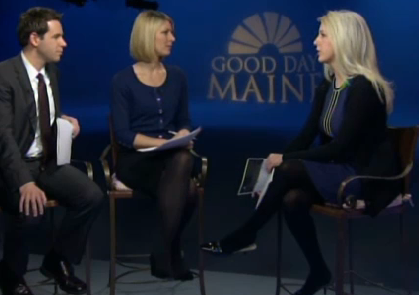
Wine Wise founder Erica Archer appeared on the Good Day Maine show Friday morning. Check out their website for a list of upcoming classes.
Thanksgiving Wine Advice
Looking for advice on selecting the perfect wine(s) for your Thanks giving dinner?
Then you’re in luck. Four different websites have posted their thoughts on makes for a good wine for next week’s holiday:
- Mister Meatball has a set of wine and beer selections provided by sommelier Scott Tyree and home brewer T.H. Strenk.
- Wines; Tasted! has posted his take on how to select a good wine for Thanksgiving.
- Wine Wise has also weighed in with advice on what characteristics make for a good Thanksgiving wine.
- The Appel on Wine column in the Press Herald has assembled Thanksgiving wine recommendations from Maine wine retailers.
For more advice on preparing your Thanksgiving dinner or escaping the kitchen and eating at out on the turkey day check out the PFM 2011 Thanksgiving Resource Guide.
Wine at Bresca and a Turkey Buying Guide
The Food & Dining section in today’s Press Herald includes an article about Bresca’s “thoughtful and passionate” wine list,
[Chef Krista Kern Desjarlais’s] attitude combines a strong personal investment in small wine makers; a passion for lesser-known varietals and wine-making regions that produce low-alcohol, food-friendly wines; and a commitment to politely, graciously nudging guests to step outside their comfort zones.
“We aim to have the guest invite us into their experience,” she said. “We want to be more educated about the wine and help people and stand for what we stand for, but not make anyone feel uncomfortable about their wine knowledge.”
and a Q&A about Thanksgiving turkeys with the head of the meat department at Whole Foods. The article includes a helpful buying guide to Maine farms selling locally raised turkeys.
What’s the difference between a hen and a tom turkey, and does one taste better than the other?
A hen is a female bird; a tom is male. How they taste will depend primarily on where and how they were raised. The main difference is size; a tom will be larger than a hen. Designating whether a turkey is a hen or a tom is not required on the label.